

Recordings from the oe-day 2018
The oe-tag
The oe-tag - Forum for non-profit organisational development has been held once a year since 2008.
The oe-tag sees itself as a place for
_Exchange
_Inspiration
_Experiment
where consultants, managers and anyone interested in organisational development are welcome.
Joint developments have been taking place here in various formats for 10 years.
Programme oe-day 23.11.2018
10:00 Welcome and Story | Workshop Panorama
11:00 Workshop Series 1 (9 parallel offers)
13:00 Lunch buffet
14:00 Story | Workshop Panorama
14:30 Workshop Series 2 (9 parallel offers)
16:30 Cafe
17:00 Digestive campfire | Sensemaking & Story
18:30 End
19:00 Party
Storytelling & sensemaking in organisations
On the construction of meaning and the effect of narratives
When the first storyteller - a rather hairy guy - told a story by the fire for the first time, it quickly became quiet around him in the cave. The glow in the eyes of the listeners bound them together, the words transported them into a world beyond tangible things and allowed them to become one. Even the small children, who didn't yet understand much of what was being said, felt something special happening... This was the beginning of a new quality of community building. The story established a connection between the world outside and the we inside - today we call this narrative sense-making.
This year's Organisational Development Day (oe-tag) will focus on the construction of meaning in organisations. Narrative approaches are increasingly being used in organisational development, coaching, leadership development, evaluation, design and marketing, project development and, last but not least, in educational work. As consultants, we work with them and feel their fascinating power and sometimes delicate dynamics.
The oe-day is an opportunity to share these experiences across the fields mentioned and to include dramaturgical, therapeutic and historical perspectives. We will take the whole day to explore how narrative approaches and perspectives on the production of meaning can be used fruitfully in organisational development.
In workshops and interactive formats, we explore a number of dimensions of narrative creation of meaning:

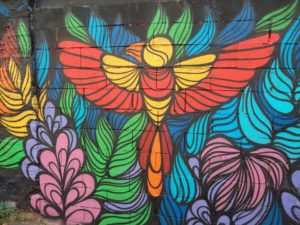
Andreas Knoth, Street Art Athens
Looking ahead and looking back
Narratives can be directed towards the past and the future: we can look back from the here and now and produce meaning in narratives. We read meaning into our biographies, give the pattern in the stream of decisions the name strategy, justify our being with the events of an evolved culture. We construct something that we then understand. Karl Weick has exposed this form of retrospective sense-making as the norm in everyday organisational life. His concept of sensemaking will be honoured and explored at the oe tag.
In addition to looking back, we can also look ahead, create images of the future, invent scenarios and rewrite dystopian social narratives into dazzling visions. If we are very quiet, the stories from the future even come to us as dreams or sensed premonitions and „roll to our feet“. This Kafka quote conjures up associations with Theory U - another concept whose intersection with storytelling & sensemaking we want to get to the bottom of at the oe tag. How do we outsource and - almost more importantly - how do we refer back from the symbolic world to the real one? How do we bring the experience of the past and the future back into concrete action in the here and now?
Change and preserve
Most stories deal directly or indirectly with transformations: A hero faces a challenge and reaches his or her goal through unforeseen twists and turns. Just as fairy tales put children in the mental state of having mastered a difficult situation, transformation stories can energise, encourage and take away fear in change processes. Since (in contrast to „change“) every development follows a story logic, the OU can use such transformation narratives as a symbolic resonance space. The question of how this can be done well in process support is another point of reference for the oe tag programme.
However, stories not only catalyse change, but also have a preserving or even conservative function (which makes them no less interesting for OE): Alignment - the synchronisation of patterns of perception in groups - is an important basis for establishing collective agency. It can be created through shared narratives and meaningful „frames“. Where they coagulate into organisational culture, they form the identity of communities and organisations. However, culture also has its pitfalls: We tell ourselves some stories about ourselves over and over again and get stuck in them. We change from being the subject of the stories to their object. Then it's time for new narratives and new frames that enable new perspectives on the world. At the oe tag, we will explore how identity creation and opening up to diversity go together in coaching and team development. How can the magic of stories inspire our collective action without making us narrow-minded?
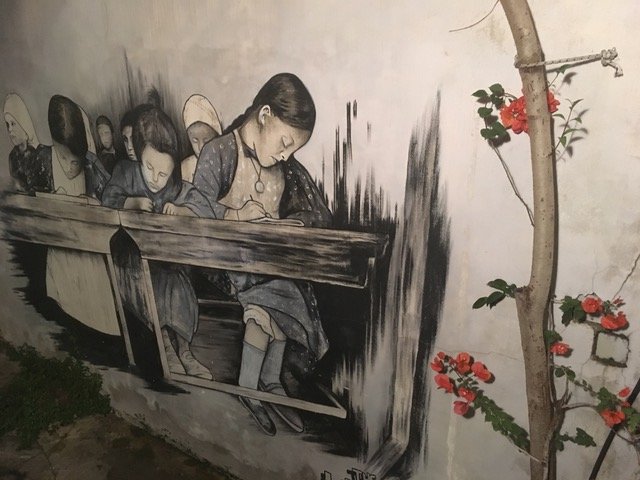
Andreas Knoth, Street Art Athens

Ralph Piotrowski, Streetart Berlin
Add and omit
Storytelling is a craft. It thrives just as much on adding things as it does on leaving things out. Connecting lines are added between events, placing them in relation to each other and thus constructing a meaning. Just as a constellation can be constructed from a cluster of stars, a story can be created from individual events or a brand story from individual qualities. Omitting unimportant things that do not contribute to the focussed meaning or even contradict it. Reducing diversity and complexity can be problematic if it is used for propaganda purposes and leads to a strong narrowing of the collective perspective. A look at the conditions for the success of a good marketing campaign should also find a place at the oe tag, as should a critical perspective on narratives as an instrument of „social hypnosis“. What makes a moving story and how should its docking surface to social reality be designed?
This year's oe-day is a very special one for SOCIUS, as we are celebrating our 20th anniversary together this year.
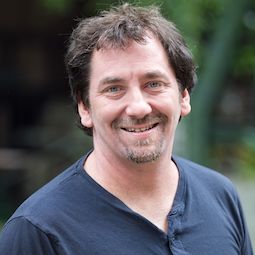
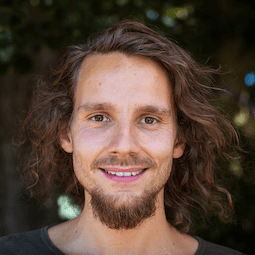
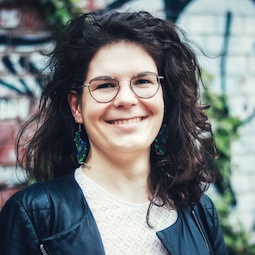
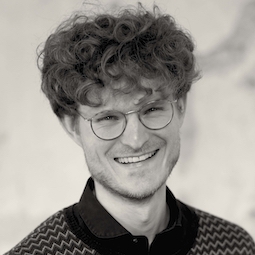
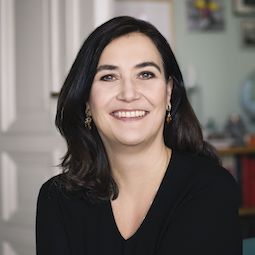
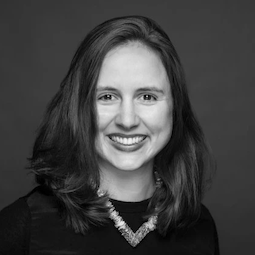
Our speakers


Workshop overview
How can your personal story create meaning in a disruptive NPO/NGO future? Discover it during a serious game journey - Susanne Conrad and Yannis Angelis
 You are invited to participate in a serious game journey. In a safe space you will experience disruptive interventions related to your NPO / NGO environment. Based on these you will create future scenarios.
To make this future desirable and meaningful you need to include yourself in this future and make your personal story part of it. Combining the serious game journey with story work - including some story work techniques and tools - will enable you to shape the future that makes sense to you and that you want to create.
During this journey you will discover answers to the following questions:
- How does digitalisation and disruption affect me in the NPO / NGO environment?
- Who am I and what am I doing in the desired future we are creating now?
- How can my personal story create meaning?
StoryWork: Navigating a complex world - Stephanie Bachmeir and Jacques Chlopczyk
 With this workshop, we want to invite participants on a narrative journey of experience (collective journey) and reflect on the added value that narrative work can bring in the areas of brand/identity, change and leadership and in the combination of these areas. Personal experience and discussion will be enriched with a practical case from the food retail sector on the topic of brand, narrative strategy and cultural change.
Working with illness - stories of success - Monia Ben Larbi
 No, chronically ill people do not belong in bed and they do not lose their professional expertise.
Illness is no reason not to be able to work - if the work adapts to the person and not the person to the supposedly unchangeable system. But creativity and illness are rarely used in the same sentence.
Taboos and heaviness limit our imagination. In this workshop, however, we tell and invent cheerful stories of success and amused failure.
Monia starts by talking about some of her (sometimes strange) experiences and how she proves / wants to prove time and again that she is by no means incapable of working.
However, the focus of the workshop is on the stories of the participants themselves - their own stories with illness and work, directly or indirectly affected. We then use these experiences to knit stories together that lovingly break the taboo, make the topic openly discussable and provide a basis for creative inclusive working models.
Learning to think with your hands - Yi-Cong Lu

This promotes personal participation and makes it easier to identify with the project.
In this workshop, we will try out intuitive design with our hands as a form of storytelling that makes the complex and abstract tangible for ourselves and others. Topics that the participants bring with them are brainstormed, developed and analysed in different group constellations and work steps, to be able to adopt unusual perspectives and develop new options for action.
In addition to art design processes, we will try out prototyping and evaluation methods of design thinking.
Biographical approaches to diversity management - Kerstin Engelhardt and Josephine Ulrich
 „In reality, however, no ego, not even the most naïve, is a unity, but a highly diverse world, a small starry sky, a chaos of forms, stages and states, of inheritances and possibilities.“
Hermann Hesse, quote from „The Steppenwolf“
Every organisation, every team and every person lives in and around diversity. Diversity in the complexity of one's own being, of diverse life experiences, encounters and worlds of experience, hopes and possibilities. Paradoxes and apparent contradictions are experienced just as much as apparent ruptures from which new possibilities and abilities can arise. These experiences can expand your own ability to see and make decisions, strengthen your self-confidence and thus make you more agile and resilient.
Biographical reflection can be a very helpful means of becoming more aware of one's own diversity. Biographical work takes place in the field of tension between changes and uncertainties on the one hand and stabilisation and continuity on the other, both in relation to private life and in relation to gainful employment or voluntary work. Biographical reflection has the function of self-assurance, creating meaning and broadening the view of the future.
The view of others on one's own biography opens up new perspectives and offers a space for social interaction through exchange. And by looking at the biographies of others ourselves, we gain insights into others' differences, their different biographical paths, decisions and strategies for action. This can open up a view of the perhaps previously unconscious resources and potential of oneself, but also of colleagues in the team or organisation.
However, organisations and teams are formed through standardisation and structuring, the by-product of which are formal and informal power structures. Standardisation and structure can cause the resources and potential of the diversity that lies within every team to be overlooked and „lost“. The privileges associated with power at the levels of decision-making, influence and gratification can further limit the agility of the organisation by concentrating on just a small group or a few skills and characters.
With a biographical reflection on one's own diversity, the resulting agility to deal with different situations can be made conscious. We want to try to draw a line here as to how the resources of diversity in teams and organisations can be made to resonate better in order to make them more agile and ultimately more resilient.
Kerstin Engelhardt - Historian, Protestant theologian, organisational consultant and systemic coach. SOCIUS partner. Many years of experience working for non-profit organisations. Specialist in biography work.
Cornelia Josephine Ulrich is a consultant and trainer in the project DIKO-B the SPI Foundation in the IQ State Network Berlin. The team of experts advises and supports labour market players and SMEs in intercultural opening processes and diversity-oriented intercultural skills development free of charge and in a practical manner in Berlin.
The „Integration through Qualification“ funding programme aims to sustainably improve the labour market integration of adults with a migration background. The programme is funded by the Federal Ministry of Labour and Social Affairs (BMAS) and the European Social Fund (ESF). Partners in the implementation are the Federal Ministry of Education and Research (BMBF) and the Federal Employment Agency (BA).
What sense do numbers make? - Rudi Piwko and Erhard Fitzner
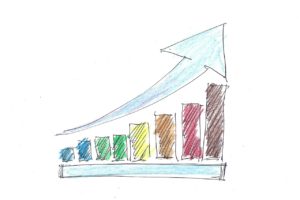 Relationship-orientated consulting work often distances itself from business-focused management consulting. In this workshop, we want to try to combine the two: What sense do considerations of financial flows, the type of income and what it is spent on, or how this has changed over the course of the organisation's history, make? Using a case study, for example, we will examine whether a business management analysis (BWA) can give us an indication of the developments at the core of the organisation. Participants then have the opportunity to contribute their own case studies and approach the question in partially standardised interviews: What do the figures tell me about the people and their work, about their visions and the overarching purpose?
Of narratives, systems, sediments, qualities, bodies and connection - Nicola Kriesel and Bea Schramm
 The shared narrative of a team is the sediment on the river of time spent together. It is always there and can be stirred up.
What role does the human body play as an instrument and signalling device in this development?
Nonsense makes sense - cheers to paradoxical quackery - Christian Baier and Geraldine Mormin
 In this workshop, we believe in the power of making nonsense. Making fun is a choice. It's fun, it frees up the mind and body, it doesn't stand in the way of work - on the contrary, making nonsense makes work enjoyable. And fun. And better, we think. And in some nonsense there is another meaning that may remain hidden from seriousness. So, of course, on one level it's about pleasure and joy and their connection with work. But it is also about identifying other levels of meaning and reflecting on how these more relaxed, humorous and direct experiences can contribute to the quality of work. Role models for these questions could be, for example, clowns and jesters, Till Eulenspiegel and Charlie Chaplin.
The workshop will be consistently experience-orientated. We want to make up nonsense in slow motion, upside down and wriggling like a rubber ball, make noises and games, form word and body chains, change perspectives and claim new ones, laugh our heads off and start all over again, walk strangely up a flight of stairs and down again in a completely different way, concoct pranks and make up stories, we want to give everything serious a good shake, play catch and hide treasures. And we want to keep pulling the reflection loop, looking for meaning in the supposed meaninglessness and, of course, reflecting on how we can carry essences of this into everyday working life.
Capturing life, building community and driving change with digital storytelling - Astrid Nierhoff
 Telling a story only orally or processing it through media makes a big difference. For the storyteller, it influences the way in which they process, remember and develop what they are telling. For the recipients, it influences the relationship they build with the stories in order to appropriate them and pass them on. Life stories processed through media develop an enormous leverage effect for the empowerment, resilience and change of each and every individual.
Media processing can mean many things: from written documents to sound recordings, from visual artefacts to video stories. Today, many people only talk about the dominance of images, while sound is often merely an accessory. Yet the interplay of voice and music in a story develops a strong effect via the subconscious and the emotional level.
In this workshop, we want to get a taste of the world of digital storytelling together. I will demonstrate the software and tools we will be working with so that everyone can get to grips with their own story.
As a creative challenge, we will try to have everyone create their own digital postcard during this time, as an interplay of image and voice. If possible, please bring a picture or an object that means a lot to you or fits a story you have in mind.
Dr phil. Astrid Nierhoff is a „story midwife“ with an intercultural background and co-director of StoryAtelier gGmbH in Cologne. The non-profit storytelling workshop with a focus on digital storytelling relies on the power of stories in personal or organisational change processes in its work with organisations.
Discourses and narrative creation of meaning - Matthias Rätzer and Andreas Knoth
 How are social discourses, patterns of interpretation and argumentation reflected in the creation of meaning in organisations? How important are narratives within organisations? How does the mechanics of this translation into organisational narratives work and what role can actors with their micro-political interests play in this?
The workshop explores these questions using a context model of narrative sense-making in organisations. By looking at fields such as inpatient geriatric care and the consulting industry as examples, we will trace the internal dynamics of collective meaning production and explore how these findings can be used for diagnostics and intervention in organisational development processes.
The art of storytelling - Chris Rogers
 Telling stories is an art. Art, craft and passion. What makes a good story? How do stories have to be told to captivate the listener? In this workshop, Chris Rogers reveals what makes his stories come alive. What it is that touches people, makes them think about their being and their existence. There is a wonderful Sufi tale about a counsellor and a sultan who wants to be wiser than he already is. The sultan summons a dervish who is known for finding the right words at the right time, for always knowing the right advice, and the sultan wants to make him his counsellor, his grand vizier. The Sultan invites the dervish to his side and tells him that he may speak at any time without being asked. But the dervish does not speak. He sits there in silence and peacefully enjoys the sultan's hospitality. He does not open his mouth even when other important people are guests and break out into great disputes. And the sultan begins to wonder why this is so.
Listening - Listening for meaning - Michèle Twomey and Joana Ebbinghaus
 „When the lips are silent, the heart has a hundred tongues“ Rumi
In the life of every organisation, there are important formative moments that are decisive for its understanding, identity and culture formation. In individual or collective narratives, however, words as a medium often have a limiting effect on both the sender and the receiver. When listening, we are sometimes already busy formulating our counter-speech or comparing what we hear with our own experiences or judgements. With instruments and sound, we want to open up spaces for a different sensory level that invites us to listen with curiosity, openness and interest.
The question that will guide us through the workshop is: To what extent can we support the development of meaning construction in organisations by listening?
Sense making in practice: collecting and analysing stories for policy making - Dave van Mourik
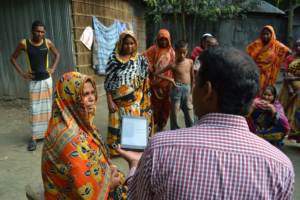 “Statistics are objective but not persuasive. Stories are persuasive but not objective. For effective policies you need multiple stories behind every statistic.”
In this workshop you will learn more about the SenseMaker approach. SenseMaker® is one of the few hand-on methodologies that is specifically designed to monitor and explore complex systems from multiple human perspectives. The approach has its roots in complex adaptive systems theory, naturalistic sensemaking and cognitive sciences. It consist of capturing large volumes of micro-narratives from daily life, powerful data visualisations, machine text analytics and robust sensemaking methods. The goal is to minimize cognitive bias, identify patterns and weak signals early and utilize the rich context of narratives to inform us about why things happen as they appear. Dave van Mourik is an experienced SenseMaker® practitioner in complex social, political and business environments around the world. (This workshop will be held in English).
Learning Histories: How organisations learn from stories of experience - Karin Thier
 In this workshop, you will learn about a storytelling method that can be used in all operational fields - from project management to knowledge management and change management. The so-called „Learning Histories“ were invented at MIT, USA, by scientists, journalists and managers, originally to utilise the collective experiences of employees from the past for the future and to avoid repetition errors. Based on social science methods and narrative elements, a shared story of experience is created.
Storytelling in politics: How are narratives developed that convince? A look behind the scenes of the European Greens. - Ruth Reichstein, Ralph Piotrowski
 In this interactive workshop, we will take a look behind the scenes of political storytelling. Are there „spin doctors“ working in secret, trying to embed stories in our heads without us realising it? How do narratives influence our political opinions? And how systematically do political actors do this?
Ralph Piotrowski will briefly present what he has found out about such questions in his dissertation and Ruth Reichenstein will give us rare insights into political practice in Brussels:
- What is a narrative and why do we need one?
- Where do political actors get inspiration for their narrative?
- How do you change a narrative that has developed and become entrenched over the years, as in the case of the Greens?
- What elements does a good narrative need?
- How can a process be designed to develop a narrative? What was it like in the Greens/EP Group? (Procedure, elements, political obstacles)
The workshop will be a colourful mixture of inputs, discussions, joint exchanges and short work sequences.
Ecology meets pregnancy counselling - which development made which sense? - Sibylle Schreiber and Olaf Bandt
 Two large organisations have carried out development processes in their offices: Pro Familia Landesverband Berlin and BUND - Freunde der Erde e.V. Both organisations have tried to respond to their own challenges with their very own approaches. In the workshop, Sibylle Schreiber (Pro Familia Berlin Regional Director) and Olaf Bandt (BUND Federal Director) will talk about their experiences and perhaps this will lead to a retrospective sense-making? After a brief introduction (information on the two processes) and a 30-minute dialogue between the two directors, the participants in this workshop are invited to work out critical moments and helpful guidelines in small groups, which will then be discussed in plenary and to which Sibylle Schreiber and Olaf Bandt can respond in conclusion. The workshop will be led by Rudi Piwko, who has also been involved in both development processes as a consultant.
Structure - Emotion - Experience: Structured feelings - the emotional journey of story recipients How the narrative structure turns your story into an experience: Stories to inspire... - Olaf Bryan Wielk
What exactly is a story? What does it consist of, what are the key elements? What structural characteristics can be found again and again in the most diverse stories, and how can storytellers and content creators become aware of these in order to apply them in the most diverse genres, genres and contexts? In the workshop, you will learn about the emotional journey of story recipients. At its core, it consists of age-old principles, visible in works from Homer to Harry Potter. Use this craft to consciously develop your own stories and protagonists in such a way that the full dramaturgical potential of your story unfolds.
 Deutsch
  English (UK)